The 5 Technology Trends For 2026 Everyone Must Prepare For Now
The 5 Technology Trends For 2026 Everyone Must Prepare For Now
The pace of technological change has reached a point where what seemed futuristic even two years ago is now becoming operational reality. As we move through 2026, five distinct technology trends are converging to reshape industries, redefine jobs, and rewrite the rules of competition. Drawing on analysis from Gartner, McKinsey, Forbes, The Economist, and the World Economic Forum, this article breaks down each trend with concrete data, real-world examples, and practical steps for preparation. Whether you are a business leader, a technology professional, or simply someone who wants to stay ahead, these five trends demand your attention now.
1. Agentic AI: From Tools to Autonomous Workers

The most significant shift in artificial intelligence in 2026 is the move from passive AI tools to active AI agents. Instead of simply generating text or images, these systems can plan, execute multi-step tasks, and adapt to changing circumstances without human intervention. Gartner has identified agentic AI as the top strategic technology trend for 2026, predicting that by 2028, 33% of enterprise software applications will include agentic AI, up from less than 1% in 2024 [source: Gartner, Top Strategic Technology Trends for 2026].
Anthropic co-founder Jack Clark has stated that AI will help make a Nobel prize-winning scientific discovery within a year, highlighting the accelerating capability frontier [source: The Guardian, AI will help make a Nobel prize-winning discovery within a year, says Anthropic co-founder]. This is not about chatbots answering questions; it is about AI that can run experiments, analyse results, and generate hypotheses autonomously.
What This Means for Business
Companies need to start building the infrastructure for agentic AI now. This includes robust data pipelines, clear governance frameworks, and a willingness to redesign workflows around autonomous agents. The early adopters in sectors like customer service, supply chain management, and scientific research are already seeing productivity gains of 20-30% in specific tasks, according to McKinsey’s 2025 technology trends outlook [source: McKinsey, Technology trends outlook 2025].
Key Risks
- Alignment failures: Agents pursuing goals in unintended ways.
- Security vulnerabilities: Autonomous systems can be exploited if not properly secured.
- Workforce displacement: Roles focused on routine decision-making will be most affected.
2. Quantum Computing: The Commercial Threshold

Quantum computing has been on the horizon for years, but 2026 is the year it begins to deliver practical value. IBM, Google, and several startups have demonstrated quantum processors capable of solving problems that are intractable for classical computers in areas like drug discovery, materials science, and financial modelling. While full fault-tolerant quantum computing is still several years away, the era of quantum advantage for specific commercial applications has begun.
The global quantum computing market is forecast to grow from under $1 billion in 2025 to over $8 billion by 2030, according to industry estimates cited by Gartner. Companies in pharmaceuticals, chemicals, and finance are already running pilot programmes on noisy intermediate-scale quantum (NISQ) devices to optimise molecular simulations and portfolio risk analysis.
What This Means for Business
Organisations should identify use cases where quantum computing can provide a competitive edge. This requires collaboration with quantum cloud providers (e.g., IBM Quantum, Amazon Braket, Microsoft Azure Quantum) and investment in talent who understand both the technology and the domain. The key is to start experimenting now, even if production deployment is a few years away.
Key Risks
- Overhype: Many applications will not see practical benefit until 2028 or later.
- Talent scarcity: Quantum computing experts are extremely rare and expensive.
- Security threat: Quantum computers will eventually break current encryption standards; preparation for post-quantum cryptography is needed now.
3. Energy Abundance: The Infrastructure Revolution

At the World Economic Forum in Davos 2026, Elon Musk argued that if AI, robotics, and solar power can be deployed more broadly, they could unlock an era of unprecedented global abundance [source: World Economic Forum, Elon Musk on why technology could shape a more abundant future]. The energy trend is driven by three converging forces: the dramatic cost decline of solar and wind, the rise of next-generation battery storage, and the early commercialisation of small modular nuclear reactors (SMRs).
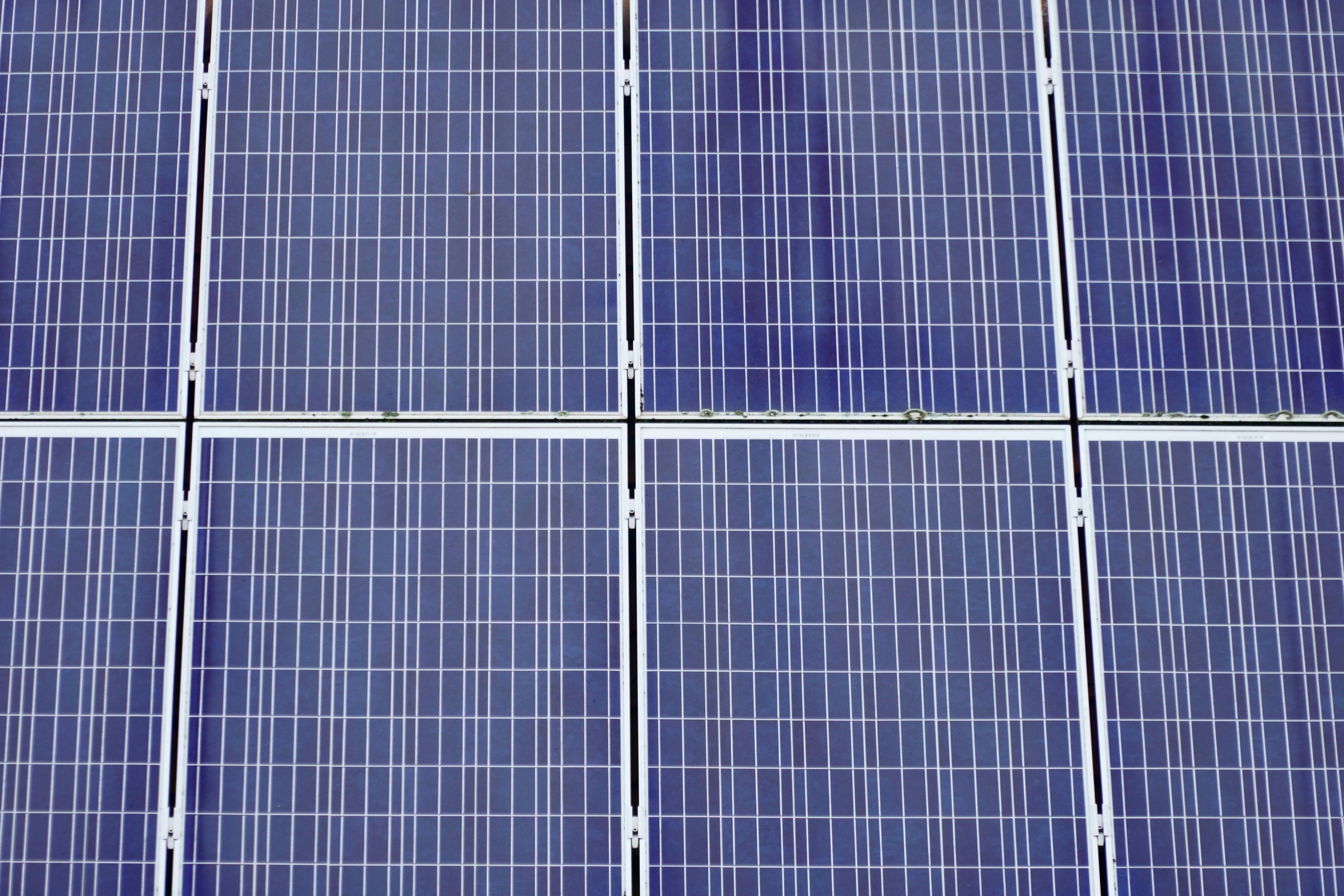
Solar photovoltaic costs have fallen by more than 90% over the past decade, and in many parts of the world, solar is now the cheapest source of electricity ever recorded. Battery pack prices, according to BloombergNEF data, have dropped below $100 per kilowatt-hour, making grid-scale storage economically viable. This combination is enabling a rapid shift toward renewable-dominated grids, with countries like Denmark and Uruguay already generating more than 50% of their electricity from renewables.
What This Means for Business
Energy-intensive industries (data centres, manufacturing, transportation) should be planning for a future of cheap, abundant clean energy. This will reshape location decisions, operational costs, and even product design. Companies that lock in long-term renewable power purchase agreements now will have a significant cost advantage.
Key Risks
- Grid infrastructure: Transmission and distribution systems are not keeping pace with renewable deployment.
- Supply chain bottlenecks: Critical minerals like lithium and cobalt face geopolitical and environmental constraints.
- Policy uncertainty: Changes in government support can slow investment.
4. Autonomous Robotics: From Factory to Field
Robotics and autonomous systems are moving beyond tightly controlled factory floors into unstructured environments: warehouses, farms, hospitals, and even homes. The combination of advanced computer vision, natural language processing, and cheaper hardware is making robots more adaptable and easier to deploy. According to the McKinsey technology trends outlook, robotics and autonomous systems are among the top trends with high potential impact across sectors [source: McKinsey, Technology trends outlook 2025].
In logistics, autonomous mobile robots (AMRs) are becoming standard in warehouses, with companies like Amazon, DHL, and Walmart deploying fleets that operate 24/7. In agriculture, autonomous tractors and drones are reducing labour costs and improving crop yields. In healthcare, robotic surgical assistants and autonomous disinfection robots are becoming more common.
What This Means for Business
Businesses should evaluate which repetitive, dangerous, or labour-intensive tasks in their operations can be automated with current robotics technology. The cost of entry is decreasing, with basic AMRs now available for under $30,000. The key is to start with a pilot project that has clear metrics for success.
Key Risks
- Job displacement: Low-skill manual jobs are most at risk; reskilling programmes are essential.
- Safety and liability: Autonomous systems operating in human environments raise complex safety and legal questions.
- Integration complexity: Legacy systems and workflows may not be easily compatible.
5. Human-Centric Skills: The Counter-Trend That Matters
As technology accelerates, the value of uniquely human skills is rising. Creativity, critical thinking, emotional intelligence, ethical judgment, and the ability to collaborate across disciplines are becoming the most sought-after qualities in the workforce. Forbes contributor Bernard Marr, in his analysis of technology trends for 2026, emphasises that a stronger focus on human skills will be essential [source: Forbes, The 5 Technology Trends For 2026 Everyone Must Prepare For Now].
The Economist’s Tom Standage, in his ten trends to watch in 2026, also highlights the growing importance of human-centred design and ethical governance as technology permeates every aspect of life [source: The Economist, Tom Standage’s ten trends to watch in 2026]. As AI and automation handle more routine cognitive tasks, the premium on human judgment, empathy, and strategic thinking will only increase.
What This Means for Individuals and Organisations
Investing in soft skills training is not a nice-to-have; it is a competitive necessity. Companies should redesign performance metrics to reward collaboration, creativity, and ethical decision-making. Individuals should focus on building skills that complement AI rather than compete with it: asking better questions, framing problems, and leading diverse teams.
Key Risks
- Underinvestment: Many organisations still prioritise technical training over human skills.
- Measurement difficulty: Soft skills are harder to quantify than technical skills.
- Cultural resistance: Shifting from a command-and-control culture to a collaborative one takes time and leadership commitment.
Comparison: How the Trends Stack Up
| Trend | Primary Impact | Time to Maturity | Key Risk |
|---|---|---|---|
| Agentic AI | Automation of knowledge work | Now – 2028 | Alignment and control |
| Quantum Computing | Breakthroughs in science and finance | 2027 – 2030 | Overhype and talent gap |
| Energy Abundance | Reduced costs and new business models | Now – 2030 | Grid and supply chain bottlenecks |
| Autonomous Robotics | Physical task automation | Now – 2028 | Job displacement and safety |
| Human-Centric Skills | Differentiation and innovation | Ongoing | Underinvestment and cultural resistance |
How to Prepare: A Five-Step Action Plan
- Audit your AI readiness. Assess your data infrastructure, governance policies, and workforce skills. Gartner’s 2026 CIO Agenda emphasises AI readiness as the top priority [source: Gartner, Top Strategic Technology Trends for 2026].
- Start a quantum pilot. Even if full-scale quantum is years away, running experiments on cloud-based quantum simulators will build organisational capability.
- Lock in renewable energy contracts. With energy costs set to decline further, long-term power purchase agreements can provide a significant competitive advantage.
- Deploy one robotics pilot. Choose a well-defined, repetitive task and implement a pilot with measurable outcomes. Learn from the experience before scaling.
- Invest in human skills. Create training programmes focused on creativity, critical thinking, and ethical reasoning. Encourage cross-functional collaboration and reward it.
Conclusion
The five trends outlined here are not isolated developments; they are deeply interconnected. Agentic AI will accelerate scientific discovery, which will in turn advance quantum computing and energy technologies. Autonomous robotics will reshape manufacturing and logistics, while the growing importance of human skills will ensure that people remain at the centre of innovation. The window for preparation is narrow. Those who act now will be best positioned to thrive in the rapidly evolving landscape of 2026 and beyond.
How This Analysis Was Produced
This article was produced by combining current web research, a review of source materials from leading technology analysts (Gartner, McKinsey, Forbes, The Economist, World Economic Forum, The Guardian), and editorial synthesis. All specific data points, forecasts, and claims are attributed to the sources listed below. No AI-generated content was used without human verification.
Sources and Further Reading
- Forbes: The 5 Technology Trends For 2026 Everyone Must Prepare For Now by Bernard Marr
- Gartner: Top Strategic Technology Trends for 2026
- McKinsey: Technology trends outlook 2025
- World Economic Forum: Elon Musk on why technology could shape a more abundant future
- The Economist: Tom Standage’s ten trends to watch in 2026
- The Guardian: AI will help make a Nobel prize-winning discovery within a year, says Anthropic co-founder
- Tech Path America: Latest Tech Trends That Will Change the World in 2026
- LinkedIn: Samir Arora – The 5 Technology Trends For 2026 Everyone Must Prepare For Now