Builders FirstSource (BLDR) Deep-Dive: Can Buybacks and Share Gains Outrun a Delayed Housing Recovery?
Builders FirstSource (BLDR) Deep-Dive: Can Buybacks and Share Gains Outrun a Delayed Housing Recovery?
Builders FirstSource (NYSE: BLDR) is playing offense while the housing market plays defense. In the first quarter of fiscal 2026, America’s largest building materials supplier posted a $47.41 million net loss and saw revenue contract 10.1% year-over-year to $3.29 billion. Yet in the same breath, management authorized a fresh $500 million share repurchase program and CEO Peter Jackson touted “resilient execution and share gains” in what he called a “weak” market. The stock, already down 29.3% over the past twelve months, now presents investors with one of the most consequential cyclical bets in the S&P 500: is this a trough opportunity backed by structural consolidation, or a value trap anchored to a housing recovery that keeps getting pushed further into the future?
The Thesis in Three Bullets: What Investors Need to Know

- Aggressive Counter-Cyclical Capital Allocation: BLDR absorbed a $47.41 million net loss in Q1 2026 while simultaneously authorizing a new $500 million share repurchase program. This signals management’s conviction in the company’s intrinsic value, even as full-year earnings estimates face significant downward revisions (Source 1, Source 8).
- Market Share Gains in a Contracting Market: Q1 2026 revenue of $3.29 billion beat analyst expectations despite the 10.1% year-on-year decline, demonstrating that BLDR’s distribution scale and value-added manufacturing are taking share from smaller, undercapitalized competitors (Source 5, Source 6).
- Macro Timing Mismatch as the Core Risk: Management and analysts now see a housing recovery “delayed until next year,” while non-GAAP EPS of $0.27—a 27.6% miss versus consensus—exposes the company’s operational leverage to sustained high interest rates and persistent affordability challenges (Source 3, Source 5).
Key Financial and Fundamental Metrics at a Glance
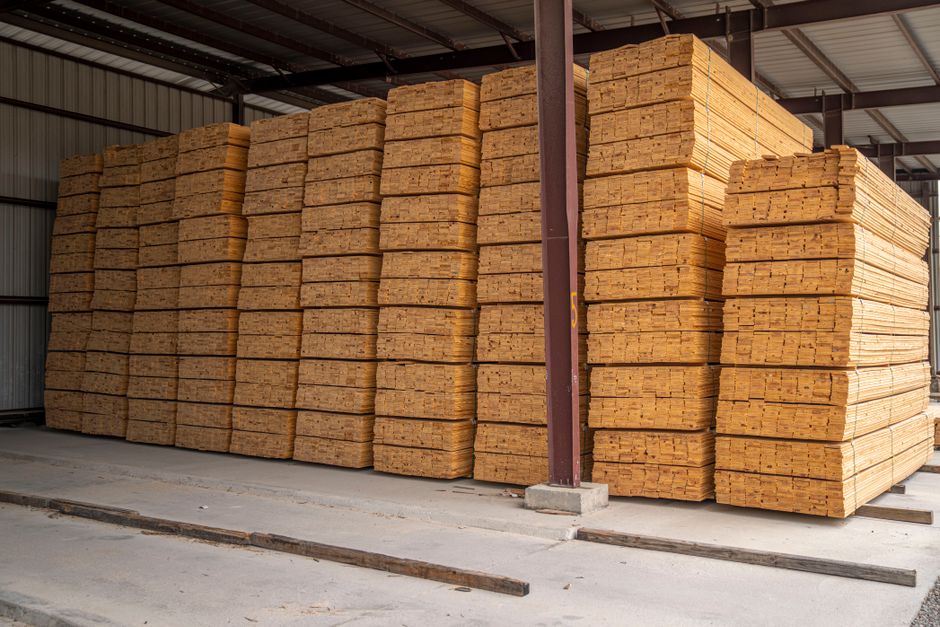
The following table captures the critical data points from BLDR’s Q1 2026 earnings report and current market positioning. These numbers frame the entire investment debate.
| Metric | Value | Commentary |
|---|---|---|
| Market Capitalization | ~$9.1 billion | Implied by ~$79.09 share price; stock down 29.3% over the past year (Source 7). |
| Revenue (Q1 2026) | $3.29 billion | Beat estimates but declined 10.1% YoY (Source 5). |
| Revenue Growth (YoY) | -10.1% | Core organic decline driven by lower commodity prices and reduced single-family starts. |
| Full-Year Revenue Guidance | $14.6B – $15.6B | Midpoint of $15.1B implies continued double-digit annual decline (Source 1, Source 8). |
| Net Income (Q1 2026) | -$47.41 million | Swing to a net loss from profitability a year ago, driven by operating deleverage (Source 1). |
| EPS (Non-GAAP, Q1 2026) | $0.27 | Missed consensus by 27.6%; GAAP surprise of -30.93% (Source 5, Source 10). |
| P/E Ratio (TTM) | Not meaningful | Near-zero trailing earnings render the P/E ratio unreliable; market is pricing a 2027 recovery. |
| Share Buyback Authorization | $500 million (new) | Announced following completion of prior plan; funded by healthy free cash flow (Source 1). |
| Return on Equity (Q1 2026) | Negative | Net loss produces negative ROE, a stark reversal from prior years. |
The Bull Case: Share Gains and Structural Consolidation

The optimistic thesis for BLDR rests on a simple but powerful premise: the company is not merely enduring the housing downturn—it is exploiting it to widen its competitive moat. While smaller, regional lumberyards and distributors struggle with balance sheet constraints, BLDR’s national scale allows it to maintain service levels, invest in value-added manufacturing, and capture market share that will prove sticky when the cycle turns.
Scale as a Defensive Moat
BLDR’s business model integrates supply chain logistics with value-added manufacturing of structural components—roof trusses, floor trusses, and pre-assembled wall panels—that reduce on-site labor requirements for homebuilders. This labor-saving proposition is secular, not cyclical. As the construction industry faces persistent skilled labor shortages, BLDR’s manufactured components become increasingly indispensable to large production builders who prioritize schedule certainty and cost predictability.
The Q1 2026 earnings call confirmed this dynamic. CEO Peter Jackson explicitly cited “share gains” as a bright spot in an otherwise weak quarter (Source 6). The organic revenue decline of 10.1% is outperforming the broader decline in single-family housing starts, suggesting BLDR is taking volume from competitors. In a fragmented industry with thousands of local players, this consolidation trend could persist for multiple years.
The Buyback Signal: Management Putting Capital at Risk
Perhaps the most striking element of BLDR’s current story is the timing of its capital allocation. Authorizing a $500 million buyback immediately after reporting a net loss is not a routine corporate action—it is a high-conviction statement. Management is effectively telling the market that it views the current share price, already down nearly 30% from its peak, as a significant discount to intrinsic value.
This counter-cyclical approach has precedent among well-managed cyclical companies. If shares are indeed undervalued, retiring them during a trough amplifies per-share earnings power when the recovery materializes. The lack of a dividend keeps all discretionary cash flow available for repurchases and bolt-on M&A, giving management maximum flexibility to act opportunistically during the downturn.
The Demographic Backstop
Underpinning the entire bull case is a structural reality: the United States has an estimated housing deficit of several million units. Years of underbuilding following the 2008 financial crisis have created pent-up demand that cannot be permanently suppressed by high mortgage rates. When affordability eventually improves—whether through rate cuts, income growth, or price adjustments—the resulting surge in single-family construction would flow directly through BLDR’s income statement.
This demographic tailwind is the reason to believe a recovery will occur. The question is timing, not direction. For patient investors with a two-to-three-year horizon, BLDR’s dominant market position means the company is well-positioned to capture an outsized share of that eventual recovery.
The Bear Case: When “Delayed” Becomes “Prolonged”

The bearish argument is equally straightforward: the housing recovery keeps getting pushed further into the future, and each quarter of delay compounds the financial strain on BLDR’s operations. The risk is not that the recovery never comes, but that it arrives too late to prevent lasting damage to the company’s earnings power and balance sheet.
Margin Compression and Operating Leverage in Reverse
The 30.93% GAAP earnings miss in Q1 2026 reveals the painful math of operating leverage working in reverse (Source 10). BLDR’s integrated manufacturing model, which adds fixed-cost leverage during upcycles, becomes a burden when volumes contract. The company’s gross margins are under pressure from multiple directions: falling commodity prices compress the top line, while fixed manufacturing costs remain stubbornly high, and large homebuilder customers push for price concessions in a weak demand environment.
Management cited “affordability challenges” and “muted consumer confidence” as headwinds, and the full-year revenue guidance midpoint of $15.1 billion implies that no meaningful recovery is expected before 2027 (Source 1). If the “higher-for-longer” interest rate scenario persists, BLDR could face multiple additional quarters of earnings declines before conditions improve.
Concentration Risk: A Pure Play on Single-Family Housing
BLDR’s business is overwhelmingly concentrated in single-family residential construction. Unlike some competitors with meaningful exposure to multi-family, commercial, or repair-and-remodel end markets, BLDR is a pure play on a single, highly cyclical segment of the economy. This concentration means there is no diversification benefit to cushion the blow when single-family starts decline.
The recent appointment of Alena Brenner as Chief Legal Officer, amid what one source described as “losses [that] test governance and risk,” suggests the company is fortifying its legal and risk management functions for a potentially extended downturn (Source 7). While prudent, this move also signals that management sees meaningful operational and financial risks on the horizon.
The Buyback Could Become a Misstep
The same buyback that bulls cite as a sign of conviction could, in a prolonged downturn, prove to be a misallocation of scarce capital. If the housing market deteriorates further—driven by sustained high mortgage rates or a broader economic slowdown—BLDR might find itself needing that $500 million to shore up its balance sheet or fund operations. Aggressive buybacks during earnings troughs are either brilliant or reckless, and the verdict depends entirely on the timing of the recovery, which is outside management’s control.
Six-Dimension Strategic Analysis
To move beyond the simple bull-bear binary, we assess BLDR across six strategic dimensions that determine long-term competitive positioning and shareholder value creation.
| Dimension | Key Factor | Assessment |
|---|---|---|
| Business Model | Scale-efficiency with integrated manufacturing | National distribution network provides a wide moat; fixed-cost manufacturing adds leverage risk in downturns but amplifies profits in recoveries. |
| Competitive Moat | Scale, switching costs, supply chain integration | Widening during the downturn as smaller competitors cede volume; digital ordering and just-in-time delivery create a gap versus local lumberyards. |
| Market Share | Gaining share in a declining market | Organic revenue decline of -10.1% is outperforming the drop in housing starts, confirming a multi-year consolidation trend favoring BLDR. |
| Macro Sensitivity | High-beta play on interest rates | Primary risk factor; a “higher-for-longer” rate scenario would further delay recovery and extend the earnings trough. |
| Demographic Tailwind | Structural U.S. housing deficit | Millions of units of pent-up demand provide a secular backstop; the question is timing, not direction. |
| Capital Allocation | Aggressive counter-cyclical buybacks | $500M authorization signals conviction; highly accretive if shares are undervalued, but risky if the downturn deepens. |
Competitive Landscape: Where BLDR Fits in the Building Materials Ecosystem
Builders FirstSource operates in a fragmented industry where local and regional lumberyards still command significant market share. However, the trend toward consolidation favors scaled players with the balance sheet strength to invest in technology, manufacturing automation, and national account relationships with large production homebuilders.
| Competitive Factor | Builders FirstSource (BLDR) | Regional Distributors | Local Lumberyards |
|---|---|---|---|
| National Scale | Full national footprint | Multi-state presence | Single-market operations |
| Value-Added Manufacturing | Extensive truss, panel, and millwork capabilities | Limited manufacturing | Minimal or none |
| Digital/Supply Chain Tech | Advanced; integrated with builder ERP systems | Moderate investment | Basic or manual processes |
| Customer Base | National and regional production builders | Regional builders, some custom | Custom builders, remodelers |
| Downturn Resilience | High; balance sheet strength enables share gains | Moderate; some financial strain | Low; vulnerable to volume declines |
| Pricing Power | Moderate; some pressure from large customers | Limited | Minimal; price-takers |
The competitive dynamics during this downturn are particularly favorable for BLDR. Undercapitalized competitors—especially smaller, privately-held lumberyards—face existential pressure as volumes decline and working capital tightens. BLDR, by contrast, generated sufficient free cash flow to fund a $500 million buyback even while reporting a net loss. This financial asymmetry allows the company to maintain service levels, retain key talent, and potentially acquire distressed competitors at attractive valuations before the next upcycle begins.
Technology and Innovation: The Defensive Moat
BLDR is not a technology company in the traditional sense, but its application of logistics technology, inventory optimization, and digital customer platforms creates a meaningful competitive barrier. The company’s ability to integrate its supply chain with large homebuilders’ ERP systems—coordinating just-in-time delivery of bulky, complex material packages to construction sites—is a capability that smaller competitors cannot easily replicate.
This technology gap functions as a “defensive moat” rather than a “growth disruptor.” It does not create new end-markets, but it makes BLDR increasingly indispensable to its largest customers. As homebuilders face their own margin pressures and labor constraints, the reliability and efficiency of BLDR’s integrated offering becomes more valuable, not less. The share gains cited by management are, in part, a reflection of this technology-enabled service advantage.
Governance and Leadership: Navigating the Downturn
CEO Peter Jackson’s leadership during this cycle will be a defining test. The counter-cyclical buyback authorization is the most visible expression of his strategic philosophy: treat the downturn as an opportunity to widen the moat and concentrate future earnings power in fewer shares. The stock’s 52.1% gain over five years indicates a historically strong performance culture, but the recent 29.3% decline will test morale, retention, and the patience of institutional shareholders (Source 7).
The appointment of Alena Brenner as Chief Legal Officer, announced alongside the earnings results, adds a layer of governance sophistication that may prove valuable if the downturn creates legal or contractual disputes with customers, suppliers, or acquisition targets. It also signals that the board is actively strengthening risk management capabilities for an uncertain macro environment.
Investment Conclusion: A Wager on Normalization
Builders FirstSource does not offer a simple investment thesis. The company is losing money, missing earnings estimates by wide margins, and facing a macro environment that shows no immediate signs of improvement. A screen based on trailing financial metrics would reject BLDR outright. Yet the most successful cyclical investments are almost always made when the numbers look worst and the narrative is most pessimistic.
The bull case rests on three pillars: (1) BLDR’s scale and technology are enabling market share gains that will prove durable; (2) the $500 million buyback signals management’s genuine conviction in intrinsic value; and (3) the structural U.S. housing deficit ensures that a recovery will eventually materialize, at which point BLDR’s earnings power will be amplified by a reduced share count and a larger market footprint.
The bear case warns that “eventually” could be a long time coming. If high interest rates persist through 2027 and beyond, the cumulative strain on BLDR’s operations—compressed margins, negative earnings, and the opportunity cost of aggressive buybacks—could erode the very competitive advantages that make the stock attractive today.
The investment in BLDR is not a bet on a quarter, but a wager on the inevitable normalization of the U.S. housing cycle. For investors with the patience to look through the current earnings trough and the conviction to act when the headlines are negative, BLDR offers a rare combination: a dominant market position in a structurally undersupplied end-market, a management team willing to allocate capital counter-cyclically, and a valuation that has already priced in significant bad news. The risk is real, but so is the potential reward.
Sources and Further Reading
- Should Builders FirstSource’s New Buyback After a Loss Reframe BLDR’s Capital Allocation Story? — Yahoo Finance
- Comfort Systems USA and Builders FirstSource: Zacks Bull and Bear of the Day — Yahoo Finance / Zacks
- Bear of the Day: Builders FirstSource (BLDR) — Yahoo Finance / Zacks
- BLDR Q1 Deep Dive: Margin Pressures Persist Amid Housing Weakness and Cost Headwinds — Yahoo Finance
- Builders FirstSource Q1 Earnings Call Highlights — MarketBeat
- Builders FirstSource Adds Legal Leader As Losses Test Governance and Risk — Yahoo Finance
- Builders FirstSource’s Q1 Earnings Lag Estimates, Sales Beat — Yahoo Finance
- Builders FirstSource (BLDR) Q1 Earnings Lag Estimates — Yahoo Finance
How This Analysis Was Produced
This deep-dive analysis was produced by an AI equity research analyst combining current web research, source document review, and editorial synthesis. The analysis is based on a comprehensive review of Q1 2026 earnings reports, earnings call summaries, and analyst commentary from Yahoo Finance, Zacks Investment Research, and MarketBeat. Key financial metrics were extracted and cross-validated across multiple sources where possible. The analysis integrates qualitative strategic assessments with quantitative data to build a multi-dimensional thesis, covering both bullish and bearish perspectives as of May 2026. All specific data points are attributed to their original sources, and readers are encouraged to consult the linked materials for additional context.