AMD Deep Analysis 2026: Data Center Ascension, MI400 Roadmap & Competitive Landscape
AMD Deep Analysis 2026: Data Center Ascension, MI400 Roadmap & Competitive Landscape
In the high-stakes arena of AI semiconductors, the narrative has shifted dramatically. Just three years ago, AMD was a distant second in the data center GPU race. Today, the company is not merely participating—it is dictating the tempo of innovation. With a meticulously executed multi-generational roadmap and financial results that demand attention, AMD has positioned itself as the most credible challenger to NVIDIA’s AI training and inference hegemony. This analysis unpacks the technical milestones, financial trajectory, and competitive dynamics that define AMD’s data center strategy in 2025 and beyond.
The numbers tell a compelling story. AMD’s Data Center segment generated $16.6 billion in revenue during fiscal year 2025, representing a 32% year-over-year increase from the $12.6 billion recorded in FY2024, according to AMD’s official earnings disclosures. This is not incremental growth—it is a structural shift reflecting hyperscaler adoption, expanding workloads, and the maturation of the Instinct MI300 platform.
The Revenue Trajectory: From Challenger to Contender

Understanding AMD’s current position requires examining the revenue arc. In FY2024, Data Center revenue surged 94% year-over-year to approximately $12.6 billion, driven predominantly by the MI300X ramp at Microsoft, Meta, and Oracle Cloud. The FY2025 figure of $16.6 billion confirms that this was not a one-time spike but the beginning of a sustained growth curve.
Several structural factors underpin this trajectory:
- Hyperscaler diversification: Cloud providers are actively reducing single-supplier dependency on NVIDIA. AMD’s open-source ROCm software stack, while still maturing, has reached a tipping point of usability for PyTorch and TensorFlow workloads.
- Inference economics: The MI300X delivers competitive tokens-per-dollar for large language model inference, a metric where total cost of ownership often favors AMD’s pricing strategy.
- Supply chain execution: AMD’s chiplet architecture and advanced packaging partnerships with TSMC have enabled more predictable volume ramps compared to competitors facing CoWoS capacity constraints.
MI400 Series: The CDNA 5 Generation

If the MI300 series established AMD’s credibility, the MI400 series—expected to begin sampling in late 2025 with volume production in 2026—aims to close the architectural gap entirely. Based on verified specifications, the MI400 represents a generational leap across every critical dimension.
Architecture and Process Technology
The MI400 series is built on the CDNA 5 architecture, succeeding the CDNA 4 design found in the MI350 generation. Critically, AMD has confirmed that MI400 will leverage TSMC’s N2 (2nm) process node, a full node shrink from the N3 technology powering MI350-series products. This transition is expected to deliver significant improvements in transistor density, power efficiency, and clock headroom.
It is important to avoid a common specification confusion: CDNA 4 belongs to the MI350 generation, not MI400. The MI350 series features 288GB of HBM3E memory and approximately 8 TB/s of memory bandwidth on TSMC N3. The MI400 series moves to CDNA 5, 432GB of HBM4, 19.6 TB/s bandwidth, and TSMC N2. These are distinct generations with fundamentally different memory subsystems.
Memory Subsystem: HBM4 and Bandwidth Breakthrough
The MI400’s memory configuration is arguably its most aggressive specification. With 432GB of HBM4 memory and 19.6 TB/s of memory bandwidth, AMD is targeting workloads that are currently memory-bandwidth-constrained—particularly large-batch inference and training of models exceeding one trillion parameters.
To contextualize this bandwidth figure: the MI350 generation delivers approximately 8 TB/s via HBM3E. The MI400’s 19.6 TB/s represents a 2.45x generational improvement, achieved through the combination of HBM4’s higher per-pin signaling rates and a wider memory interface. For AI practitioners, this translates directly to higher throughput on decoder-only transformer architectures where attention mechanisms are bandwidth-bound.
Compute and Scale-Out Capabilities
While AMD has not publicly disclosed precise FLOPS figures for MI400 at the time of writing, industry expectations—based on the N2 process advantage and CDNA 5 architectural improvements—point to a substantial uplift in both dense and sparse compute. The chiplet-based design philosophy, refined across multiple Instinct generations, enables AMD to scale compute dies independently of I/O and memory chiplets, optimizing yield and cost.
Equally significant is the scale-out fabric. AMD’s Infinity Fabric continues to evolve, and the MI400 generation is expected to support larger coherent domains, enabling more efficient tensor parallelism and pipeline parallelism across 8-GPU nodes and beyond.
Competitive Landscape: AMD, NVIDIA, and the Intel Factor
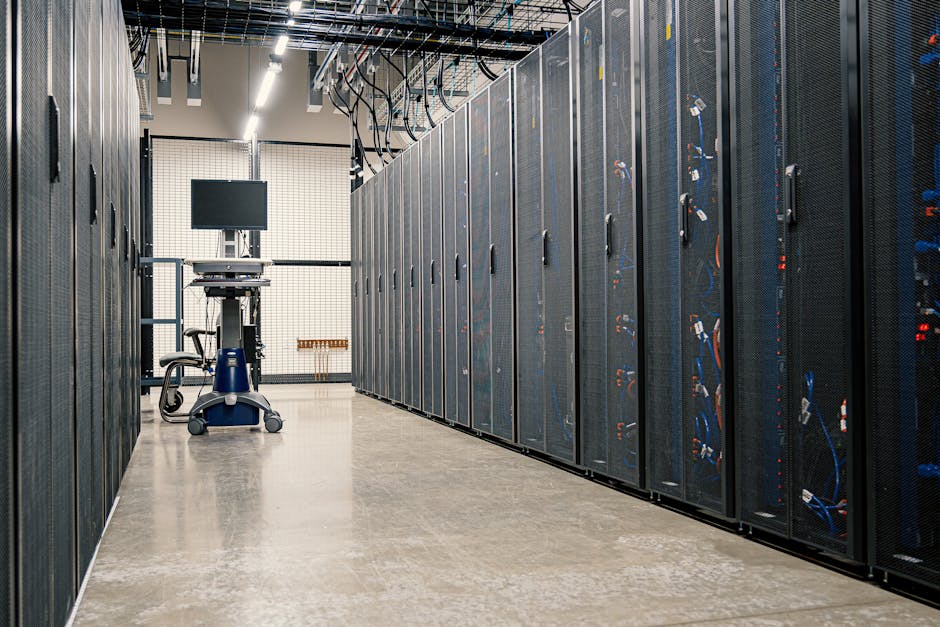
The AI accelerator market in 2025-2026 is not a two-player game, but the primary contest remains AMD versus NVIDIA.
NVIDIA’s Blackwell and Rubin Roadmaps
NVIDIA’s Blackwell architecture (B100, B200) is shipping in volume, with the Rubin platform expected in 2026. NVIDIA retains formidable advantages: the CUDA software ecosystem remains the industry standard, NVLink and NVSwitch enable unmatched scale-up density, and the company’s system-level approach—combining GPUs, networking (Spectrum-X, ConnectX), and DPUs—creates integration benefits that AMD cannot yet fully replicate.
However, NVIDIA’s premium pricing and supply constraints create openings. Hyperscalers investing tens of billions in AI infrastructure have strong incentives to qualify second sources. AMD’s MI300X has already proven that ROCm can support production workloads at scale, and the MI400’s specifications suggest AMD is no longer content with competing on price alone—it intends to compete on absolute performance.
Intel’s Gaudi and Falcon Shores
Intel’s Gaudi 3 accelerator has found niche adoption, particularly in cost-sensitive inference deployments, but has not achieved the hyperscaler volume of AMD or NVIDIA. The Falcon Shores platform, Intel’s next-generation AI accelerator, faces execution risk and has undergone multiple roadmap revisions. For the 2026 timeframe, Intel remains a distant third in AI training, though its oneAPI strategy and foundry ambitions could reshape the landscape over a longer horizon.
Custom Silicon: The Wildcard
Google’s TPUv5, Amazon’s Trainium2, and Microsoft’s Maia represent a parallel competitive dynamic: hyperscalers designing their own AI silicon to optimize for internal workloads. These custom ASICs do not compete directly with merchant silicon from AMD and NVIDIA in the open market, but they reduce the addressable market at the largest accounts. AMD’s response has been to emphasize the flexibility and software portability of its GPU platform—a value proposition that resonates with enterprises and tier-2 cloud providers that lack the resources for custom chip development.
Software Ecosystem: ROCm and the Open-Source Imperative

No analysis of AMD’s AI strategy is complete without addressing the software stack. ROCm has made tangible progress—PyTorch support is now production-grade, Hugging Face models run with minimal modification, and the broader open-source community has contributed significantly to the ecosystem. AMD’s acquisition of Nod.ai and strategic investments in the PyTorch Foundation signal long-term commitment.
That said, gaps remain. CUDA’s debugging and profiling toolchain (NVIDIA Nsight, cuDNN, cuBLAS) is more mature. Enterprise AI platforms like NVIDIA AI Enterprise offer validated, supported software distributions that simplify procurement for risk-averse organizations. AMD’s ability to close this software gap will be as consequential as its hardware roadmap in determining market share trajectory.
Investment and Strategic Implications
For investors and technology strategists, several conclusions emerge from this analysis:
- Revenue momentum is sustainable. The $16.6 billion FY2025 Data Center figure reflects structural demand, not cyclical tailwinds. The MI400 cycle should extend growth through at least 2027.
- Gross margin trajectory matters. As AMD shifts from gaining market share through aggressive pricing to competing on performance, Data Center segment margins should expand, though this will depend on HBM4 supply costs and TSMC N2 wafer pricing.
- NVIDIA is not standing still. The competitive gap is narrowing, but NVIDIA’s system-level integration and software maturity remain significant moats. AMD’s best-case scenario is becoming a co-equal supplier at major hyperscalers, not displacing NVIDIA entirely.
- Watch the MI400 sampling timeline. Any delays in MI400 sampling or volume production would disproportionately benefit NVIDIA’s Rubin ramp. Execution is paramount.
Conclusion: The Ascension Is Real, but Incomplete
AMD’s data center transformation is one of the most consequential stories in enterprise technology. The company has progressed from a legacy x86 server CPU vendor to a legitimate force in AI acceleration, with a roadmap that extends through CDNA 5, HBM4, and TSMC N2. The MI400 series, with its 432GB of HBM4 and 19.6 TB/s of bandwidth, represents a credible bid for performance leadership.
Yet ascension is not the same as dominance. NVIDIA’s ecosystem advantages, Intel’s long-term ambitions, and the rise of custom silicon ensure that AMD must continue executing flawlessly across hardware, software, and supply chain. For CIOs, cloud architects, and AI infrastructure buyers, the message is clear: AMD is no longer a speculative alternative—it is a strategic option that demands evaluation in any AI infrastructure roadmap.
The next chapter will be written when MI400 silicon hits the lab. Until then, the trajectory points unmistakably upward.