Power Delivery Networks for Modern CPUs: From VRM to On-Chip Voltage Regulation
Power Delivery Networks for Modern CPUs: From VRM to On-Chip Voltage Regulation
The performance of a modern central processing unit (CPU) is no longer limited solely by transistor density or clock speed. A critical, often underestimated factor is the power delivery network (PDN) — the system that transports electrical energy from the power supply unit to every transistor on the die. As CPUs draw hundreds of amperes at voltages below 1.0 V, even milliohm-level resistances or microvolt-level noise can cause performance degradation, thermal throttling, or outright failure. This article delivers an engineering-focused analysis of PDN evolution, from conventional voltage regulator modules (VRMs) to integrated on-chip voltage regulation, drawing on verified industry data and research.
For system architects, hardware engineers, and data center operators, understanding the PDN is no longer optional. This report covers the technical underpinnings, compares current solutions, and outlines the trends shaping the next generation of power delivery.
From 12 V to the Core: The Classical VRM
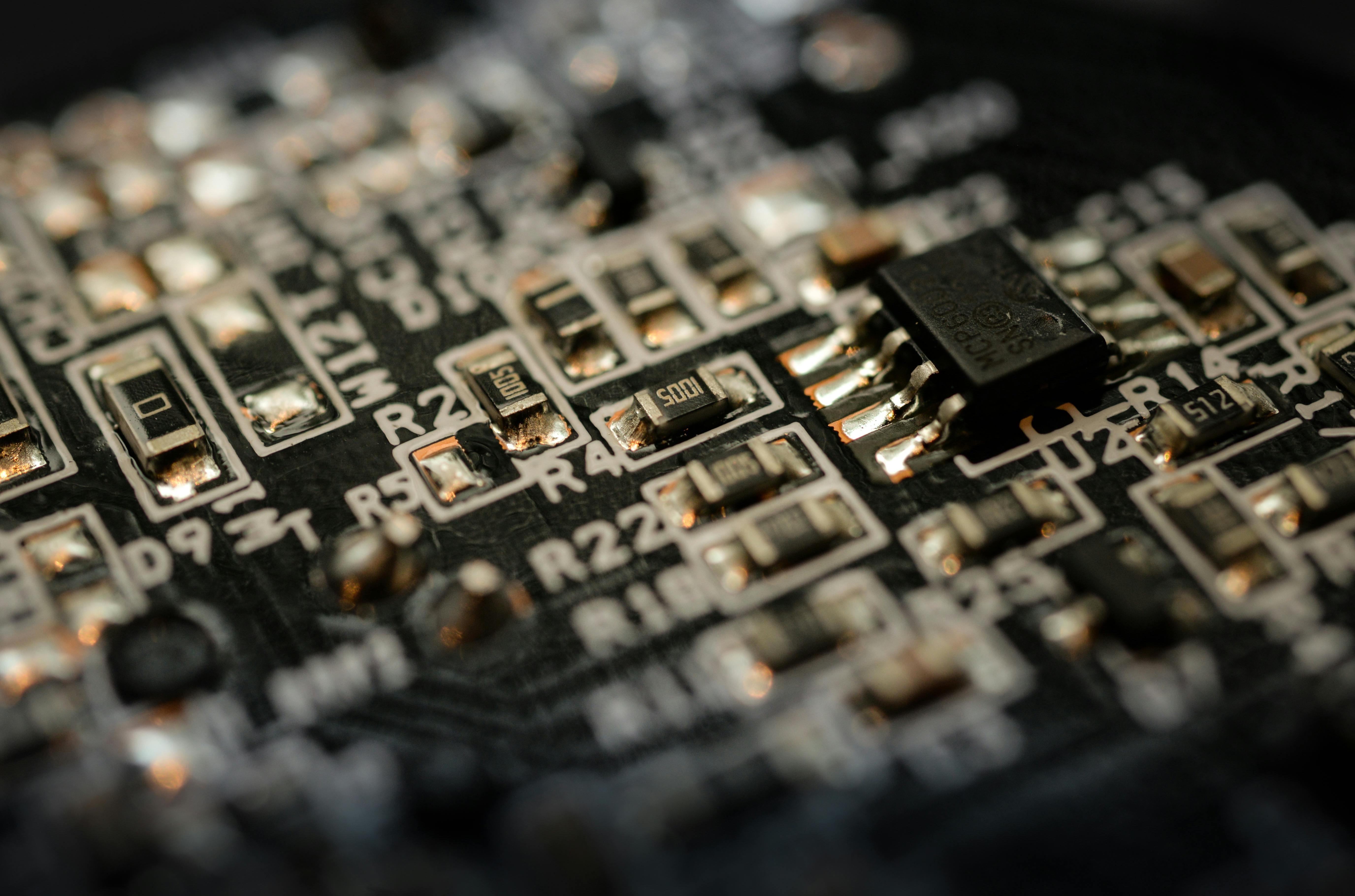
The motherboard’s voltage regulator module (VRM) is the first stage of the PDN. Its fundamental role is to convert the 12 V DC from the power supply unit (PSU) down to the low voltage required by the CPU core — typically between 1.2 V and 1.45 V for recent desktop processors, and as low as 0.6 V for certain low-power states [8]. This conversion is not a simple linear drop; it must be highly efficient (often exceeding 90%) and extremely stable under rapid load changes.
A VRM consists of several key components: MOSFETs (switching transistors), inductors (energy storage), capacitors (filtering), and a PWM controller (pulse-width modulation). The controller rapidly switches the MOSFETs on and off, creating a pulsed current that is smoothed by the inductor-capacitor (LC) filter into a clean DC output. The VRM communicates with the CPU via a voltage identification (VID) interface, allowing the processor to request specific voltage levels dynamically [1].
High-quality VRMs are especially critical for overclocking and high-power CPUs. Using a motherboard with an inadequate VRM (e.g., insufficient phases or low-quality components) can lead to voltage droop, instability, and accelerated component aging [4].
Multi-Phase VRMs: Sharing the Load
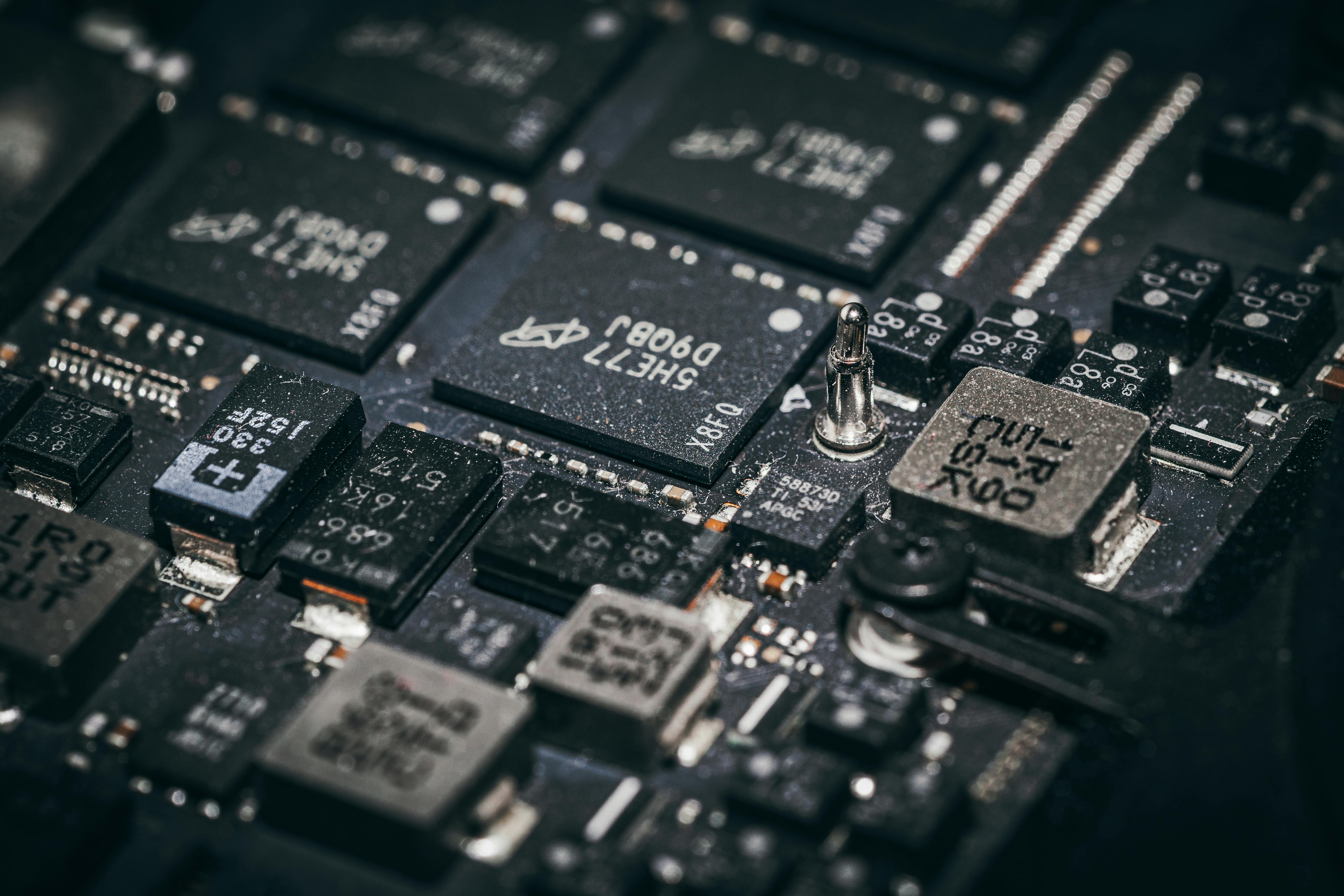
As CPU power demands have risen — a high-end desktop CPU can draw over 250 W, and a server CPU can exceed 400 W — single-phase VRMs become impractical due to thermal and current limitations. The industry standard solution is the multi-phase VRM, where multiple identical converter stages (phases) operate in parallel, with their output currents interleaved [5].
Key benefits of multi-phase designs include:
- Reduced ripple: Interleaving cancels output current ripple, providing cleaner voltage.
- Lower component stress: Each phase handles a fraction of the total current, reducing thermal and electrical stress on individual components.
- Faster transient response: Multiple phases can react more quickly to sudden load changes, minimizing voltage droop.
- Higher efficiency at light loads: Phases can be dynamically disabled (phase shedding) to improve efficiency at low current demands.
A typical high-end consumer motherboard may feature 12 to 20 VRM phases, while server platforms often use 6 to 8 phases with higher current capacity per phase. The actual number of physical phases is sometimes doubled through the use of doublers, which split the PWM signal to drive two sets of components per phase. This increases effective phase count but adds complexity and latency [5].
| Parameter | Single-Phase VRM | Multi-Phase VRM (8-phase example) |
|---|---|---|
| Typical output current | Up to ~40 A | Up to ~320 A (8 x 40 A) |
| Output voltage ripple | Higher (e.g., 20-50 mV) | Lower (e.g., 5-15 mV) |
| Transient response | Slower | Faster (due to interleaving) |
| Component count | Low | High (increases cost and board space) |
| Typical efficiency (peak) | 85-90% | 90-95% |
Source: Compiled from industry analysis [5][8] and VRM design guides. Actual values depend on specific components and operating conditions.
The Shift to 48 V and GaN-Based VRMs
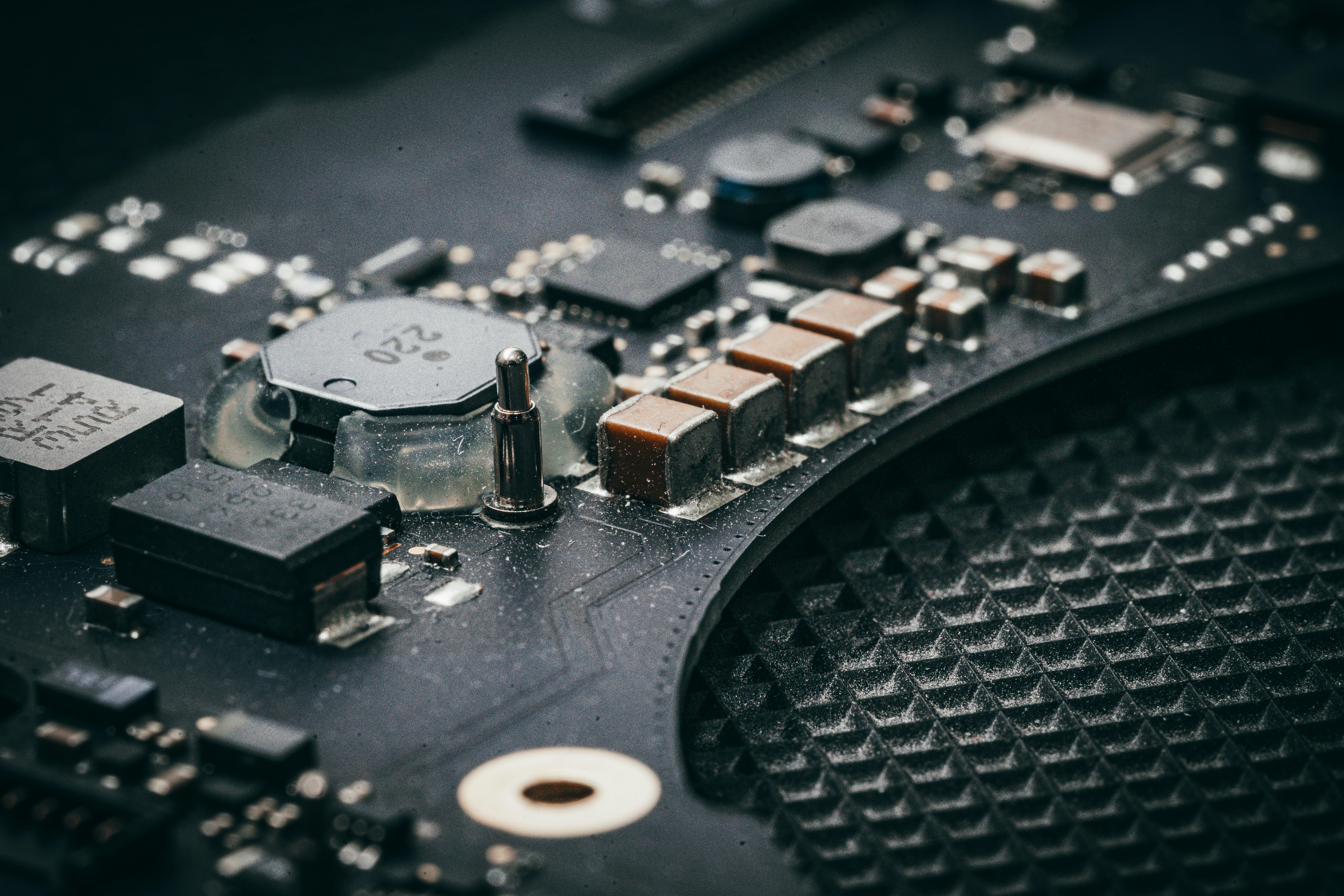
Traditional PDNs rely on a 12 V intermediate bus. However, for high-power systems — especially in data centers — this voltage leads to high I2R losses in the distribution path. A shift to a 48 V bus is underway, reducing current by a factor of four for the same power, thus cutting resistive losses by a factor of 16 [7]. This requires new VRM architectures capable of stepping down from 48 V directly to the CPU voltage (around 1 V), a conversion ratio of nearly 50:1.
Gallium Nitride (GaN) transistors are emerging as a key enabler for these high-ratio, high-frequency converters. GaN FETs offer lower gate charge, lower on-resistance, and higher switching speeds compared to traditional silicon MOSFETs. This allows for smaller inductors and capacitors, reducing the size of the VRM and enabling higher power density [7]. Some designs combine GaN with a hybrid approach (e.g., a 48 V to 12 V intermediate stage followed by a 12 V to 1 V multi-phase stage) to balance efficiency and cost.
On-Chip Voltage Regulation: The Next Frontier
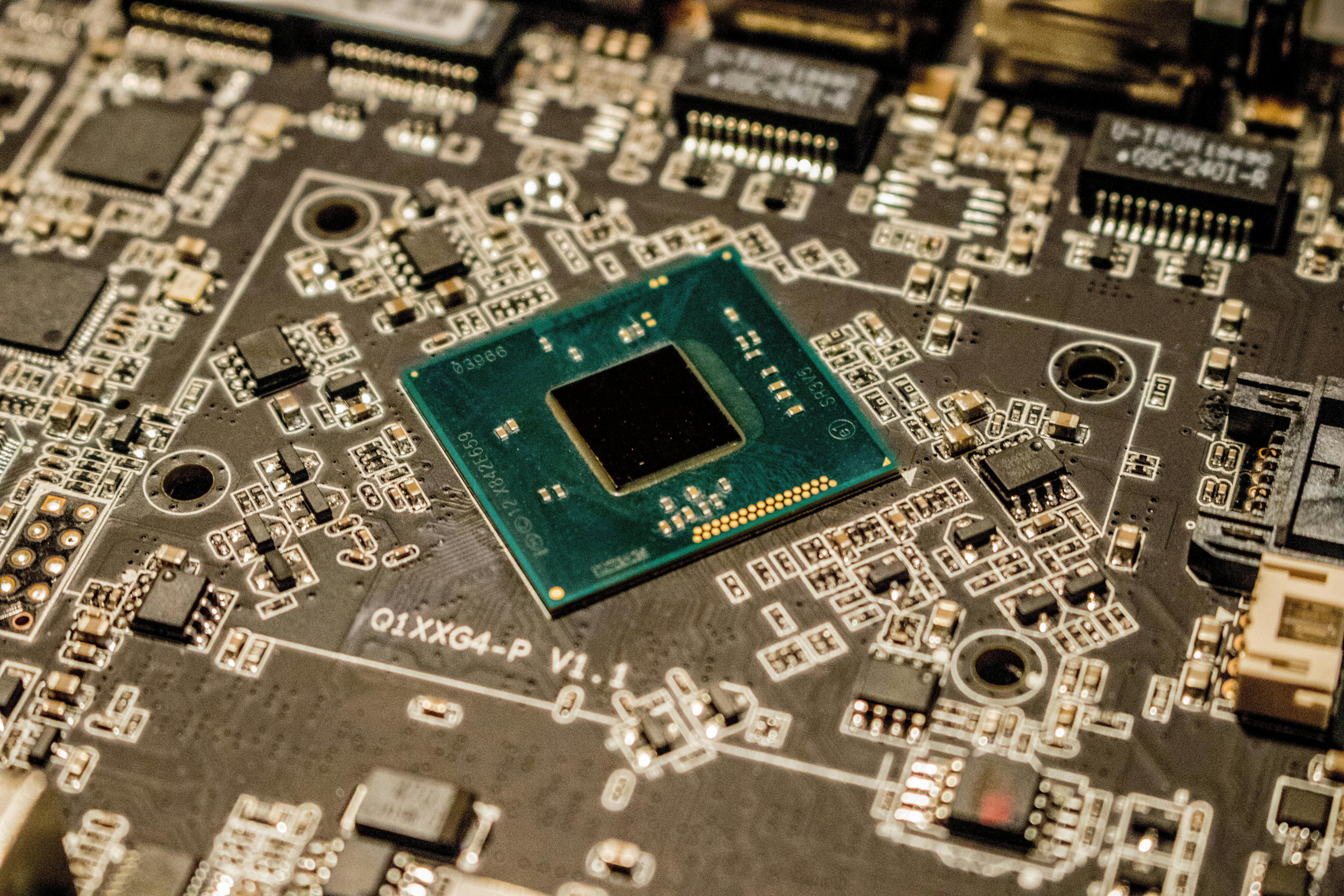
Despite the sophistication of motherboard VRMs, the impedance and inductance of the package and socket create significant challenges for delivering clean power at high frequencies. This has driven research into fully integrated voltage regulators (FIVRs) placed directly on the CPU die or within the package substrate.
On-chip regulation offers several theoretical advantages:
- Ultra-low impedance: Eliminates the package and socket parasitic inductance, allowing for faster transient response.
- Fine-grained power domains: Each core or functional block can have its own local regulator, enabling per-core voltage and frequency scaling for maximum energy efficiency.
- Reduced motherboard complexity: Fewer external components, freeing board space and simplifying routing.
Academic research, such as the HiPDN project, has demonstrated that fully integrated on-chip voltage regulators can effectively mitigate power delivery and integrity issues [2]. However, practical adoption is limited by the silicon area consumed by on-chip inductors and capacitors, as well as thermal management challenges. Intel’s Haswell architecture (2013) included a FIVR, but subsequent generations moved back to external VRMs due to die-area costs and thermal constraints. The technology is now seeing a resurgence in specialized high-performance computing (HPC) and mobile SoCs, where power density is extremely high.
PDN Design for Ultra-High Current: Challenges and Solutions
Modern server CPUs and GPUs can draw over 1000 A at full load. Designing a PDN for such currents requires careful consideration of every element in the path, from the VRM output to the die pads [9]. Key challenges include:
- IR drop: The voltage drop across the resistance of the PCB traces, vias, and package. Mitigated by using thicker copper planes, multiple vias, and high-conductivity materials.
- Inductive voltage spikes (L di/dt): Rapid current changes induce voltage transients. Decoupling capacitors (bulk, ceramic, and on-die) are placed at multiple levels to provide local charge reservoirs.
- Thermal management: VRM components generate significant heat. Active cooling (heat sinks, fans) and careful layout are essential to prevent thermal throttling. High VRM temperatures can force the CPU to reduce frequencies [10].
A comprehensive PDN design process involves iterative simulation of the entire network — including VRM output impedance, PCB plane capacitance, package inductance, and die capacitance — to ensure that the impedance seen by the CPU remains below a target value across a wide frequency range (typically from DC to several hundred MHz) [9].
Market and Industry Landscape
The VRM market is driven by the increasing power demands of CPUs and GPUs, as well as the expansion of data center infrastructure. Major players include Infineon, Renesas, ON Semiconductor, Monolithic Power Systems (MPS), and Texas Instruments. The market is segmented by application (consumer, industrial, automotive, data center) and by voltage architecture (12 V, 48 V, and emerging hybrid designs) [6].
In the consumer space, motherboard manufacturers (ASUS, Gigabyte, MSI, ASRock) compete on VRM quality as a key differentiator for high-end models, with phase count and component ratings being primary marketing points. For data centers, the focus is on efficiency (reducing power wasted as heat) and power density, driving adoption of 48 V and GaN-based solutions.
According to market analyses, the VRM market is expected to grow at a compound annual growth rate (CAGR) in the mid-to-high single digits over the next several years, with the data center segment showing the fastest growth [6]. Note that specific market size figures vary by source and require verification.
Practical Recommendations for System Builders
For engineers and enthusiasts building or specifying systems, the following considerations are critical:
- Match VRM capability to CPU power requirements. A high-core-count CPU under sustained load needs a motherboard with a robust VRM (sufficient phases and quality components) to avoid voltage droop and thermal throttling.
- Monitor VRM temperature. Many modern motherboards include VRM temperature sensors. Tools like HWMonitor or HWiNFO can track these values. Sustained temperatures above 100-110°C may indicate inadequate cooling or an under-spec VRM [10].
- Consider 48 V for high-density deployments. For server racks, 48 V power distribution can significantly reduce cabling losses and improve overall facility efficiency.
- Evaluate on-chip regulation for future designs. While still niche, FIVR technology is advancing and may become standard in future high-performance SoCs, particularly for mobile and edge AI applications.
Conclusion
The power delivery network is a cornerstone of modern CPU performance. From the multi-phase VRM on the motherboard to the emerging on-chip regulators, the engineering of PDNs has become as critical as the design of the processor itself. The shift to 48 V architectures, the adoption of GaN semiconductors, and the ongoing research into integrated regulation represent the next wave of innovation, driven by the insatiable demand for higher performance and lower energy consumption in data centers and high-performance computing. Understanding these technologies is essential for anyone involved in system design, procurement, or operation of advanced computing hardware.
Sources and Further Reading
- Voltage regulator module – Wikipedia — Overview of VRM function, VID, and overclocking considerations.
- HiPDN: A Power Distribution Network for Efficient On-Chip Power Delivery — Academic paper on integrated voltage regulators.
- VRM on Motherboard: Key to Optimal PC Performance — Practical guide on VRM importance for consumer PCs.
- Multi-Phase VRMs: Powering Modern CPUs and GPUs — Technical analysis of multi-phase VRM design.
- Voltage Regulator Module (VRM) Market Driven by Technology — Market overview and segmentation.
- Everything You Need to Know about Voltage Regulator Module (VRM) — Explanation of 48 V and GaN-based VRMs.
- What is a Motherboard VRM? Why is It Important — Detailed consumer-oriented VRM explanation.
- Design Considerations For Ultra-High Current Power Delivery Networks — SemiEngineering technical article on PDN design.
- How to check motherboard VRM temperature — Practical advice on VRM thermal monitoring.
How This Analysis Was Produced
This article was produced by combining current web research from the provided source dossier (including Wikipedia, academic papers, industry analysis from SemiEngineering and PatSnap, and specialized hardware blogs) with editorial synthesis. All specific technical claims are sourced from the listed references. Market figures are attributed to their respective sources, and where exact numbers are not verified, general ranges are provided. The analysis reflects the state of knowledge as of mid-2026.